Beyond the Hallmarks: Rethinking Cancer Therapy Through Tumour Ecosystems, Immunity, and Therapeutic Resistance
Reflections from the 11th Annual Meeting of Alleanza Contro il Cancro (ACC), Naples, Italy | 10–12 September 2026
In September, I had the opportunity to attend the 11th Annual Meeting of Alleanza Contro il Cancro (ACC) in Naples, Italy. The congress brought together researchers and clinicians exploring some of the most exciting developments in cancer biology, immunotherapy, tumour evolution, spatial profiling, and therapeutic resistance. Several presentations challenged me to think beyond individual molecular mechanisms and consider cancer as a dynamic and rapidly evolving ecosystem.
Here are some of the scientific discussions that particularly resonated with me.
The Future of Cancer Therapy
Douglas Hanahan opened the meeting with a fascinating lecture on the Hallmarks of Cancer. Although he joined remotely, he gave a compelling presentation! One point that particularly resonated with me was his discussion of why cancer therapies often fail to demonstrate consistent results: the sheer complexity of tumour immunobiology, with multiple tumour-promoting and tumour-inhibiting mechanisms operating simultaneously. The dream scenario would be to target all the hallmarks of cancer at once. However, such a "Hail Mary" approach could result in overwhelming toxicity and unacceptable side effects. Instead, he proposed a more realistic future for cancer therapy involving rational combinations, layers, and sequences of treatments, strategically targeting the interconnected mechanisms sustaining tumour progression.
He illustrated this concept of hallmark co-targeting through several therapeutic strategies, including VEGF-A inhibition combined with immune checkpoint blockade and approaches targeting DNA repair or apoptotic pathways. One particularly fascinating example involved glioblastoma, a highly vascularized tumour in which anti-VEGF therapy alone has demonstrated limited clinical benefit. Preclinical studies combining VEGF pathway inhibition with the tricyclic antidepressant imipramine, and addition of immune checkpoint blockade, demonstrated promising antitumour activity. This approach promoted autophagy, remodeled tumour vasculature, and reprogrammed immunosuppressive M2-like macrophages towards more immunostimulatory states, facilitating T-cell recruitment and activation. What fascinated me was the possibility of transforming an immunosuppressive tumour microenvironment by simultaneously targeting several interconnected biological processes.
Spatial Biology and Next-Generation Biomarkers
Janis Taube's presentation on AstroPath introduced another exciting perspective: the development of next-generation biomarkers derived from large, well-curated datasets. We are moving beyond traditional unidimensional biomarkers towards multiplex and multimodal approaches, capable of capturing several biological features simultaneously. For example, conventional chromogenic immunohistochemistry typically evaluates a limited number of markers, whereas multiplex immunofluorescence (mIF) enables simultaneous characterization of multiple cellular phenotypes while preserving their spatial relationships. However, a major challenge remains: how do we translate these sophisticated technologies into reproducible, standardized, and clinically implementable assays? Issues involving staining consistency, analytical reproducibility, interlaboratory variability, and clinical validation remain crucial considerations.
Another fascinating presentation came from Anna Tosi, who explored the immune landscape of breast cancer brain metastases. Compared with primary breast tumours, brain metastases can exhibit more immunosuppressive and exhausted immune profiles. The central nervous system represents a unique immunological niche, shaped by resident microglia, infiltrating macrophages, and other immune populations. Metastatic colonization can profoundly alter this landscape, generating substantial immune heterogeneity. Importantly, these complex interactions are difficult to reproduce faithfully in experimental models, while obtaining well-characterized human specimens remains challenging. She also highlighted how peripheral immune profiles may evolve during treatment, raising an important question: should immune monitoring become a more dynamic, longitudinal component of cancer care?
The Gut Microbiome: An Unexpected Amplifier of Antitumour Immunity
Luigi Nezi's presentation on the microbiome and immunotherapy was easily one of the most fascinating discussions for me! The gut microbiome can influence responses to immune checkpoint inhibitors (ICIs), but understanding precisely how, and translating this knowledge into effective interventions, remains challenging. He discussed evidence associating higher dietary fibre intake with improved immunotherapy responses, potentially mediated by changes in microbial composition and function. Interestingly, certain probiotic interventions have been associated with reduced microbial diversity and poorer responses to immune checkpoint blockade, challenging the assumption that certain probiotics are universally beneficial.
Faecal microbiota transplantation presents another promising strategy, but questions remain regarding donor selection, microbial engraftment, safety, scalability, and identifying the microbial populations responsible for therapeutic benefit. One particularly fascinating concept involved bacterial flagellar proteins and molecular mimicry. Certain microbial proteins may contain epitopes resembling tumour-associated antigens, potentially stimulating cross-reactive immune responses. Specific bacterial flagellar genes may therefore have value as biomarkers of immunotherapy response. An analogy from the presentation stayed with me: the microbiome may not be the answer itself, but rather a windmill that amplifies an existing immune response. He also discussed how bacteria can metabolize anticancer drugs, potentially reducing active drug availability and influencing therapeutic efficacy. These observations highlight the microbiome's potential to influence cancer treatment through immune regulation, microbial metabolism, and direct drug interactions.
Therapeutic Resistance: Persister Cells and Exploiting Vulnerabilities
Giovanni Tonon's presentation on cancer persister cells introduced another fascinating dimension of therapeutic resistance. Drawing parallels with bacterial antibiotic tolerance, he emphasized that drug tolerance is not simply about concentration; time also matters. Some cancer cells survive treatment through adaptive, potentially reversible drug-tolerant states without necessarily possessing stable genetic resistance mechanisms. These persister populations may provide a reservoir from which acquired resistance eventually develops. His discussion explored how cellular stress responses, autophagy, and ferroptosis influence survival under therapeutic pressure. The central question was compelling: why do certain cancer cells survive therapy when others die?
The discussions on targeted therapies extended this concept further. As highlighted in presentations on RAS signaling and acquired resistance, KRAS is no longer considered universally “undruggable.” Yet resistance to targeted therapies continues to create significant challenges. Kristi Buzo presented an intriguing strategy involving WEE1 kinase inhibition to exploit replication stress in colorectal cancer cells with acquired resistance to EGFR-targeted therapies. Resistant cells can exhibit increased basal DNA damage, nucleotide imbalances, and replication stress. WEE1 normally helps regulate cell-cycle checkpoint control, allowing cells time to manage DNA damage before progressing through mitosis. Inhibiting WEE1 can exploit this vulnerability, forcing stressed cancer cells towards premature mitotic progression and potentially triggering cell death. The concept is exciting: could the biological adaptations that allow cancer cells to survive therapy also create the vulnerabilities we can exploit to overcome resistance?
Final Reflections: Towards More Integrated Cancer Therapies
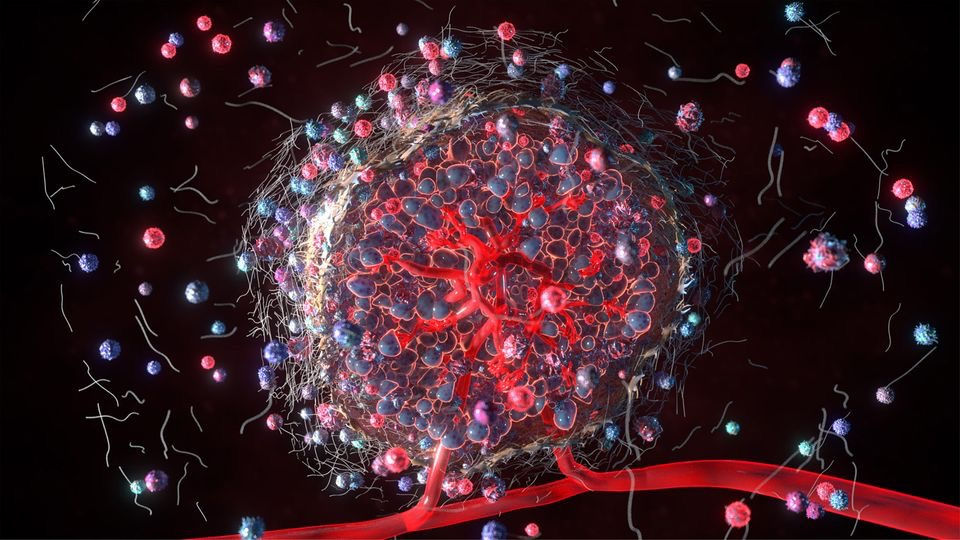
Looking back, one theme connected many of the presentations: Cancer is not a static disease or simply a collection of malignant cells. It is a dynamic, evolving ecosystem shaped by interactions between tumour cells, immune populations, the extracellular matrix, microbial communities, and therapeutic pressure.
And perhaps this brings us back to Douglas Hanahan's opening message. Rather than attempting a heroic assault on every hallmark simultaneously, the future of cancer therapy may depend on understanding these interconnected mechanisms well enough to develop rational combinations, layers, and sequences of treatment. As someone working on miRNAs, tumour biology, and immune regulation in lung cancer, I found these discussions particularly valuable. They reminded me of the importance of understanding not only what individual molecular mechanisms do, but also how they interact within the broader tumour ecosystem.
There is still so much we don't understand, but also so much to be excited about.
Grateful to the organizers, speakers, and scientific community for such a stimulating meeting!
The perspectives shared here are my personal reflections on selected presentations at ACC 2026, rather than a comprehensive summary of the congress.
Cheers,
Kuku

Comments